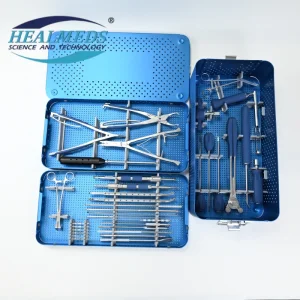
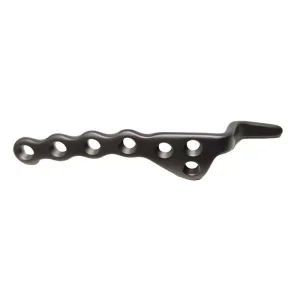
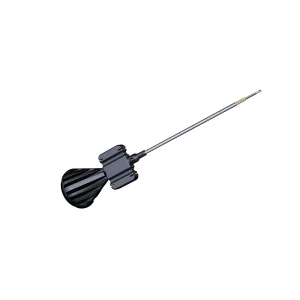
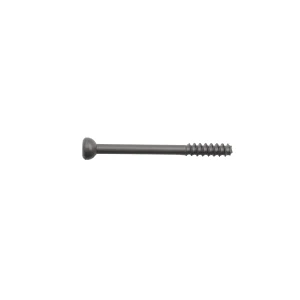
Explore our selection of top-performing clinical solutions for spine stabilization, joint reconstruction, and precision trauma procedures.
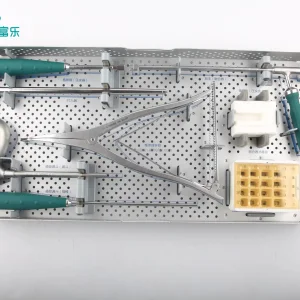
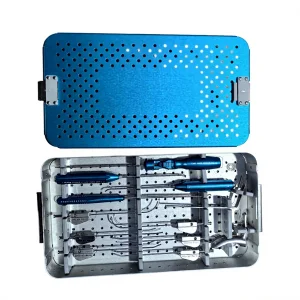
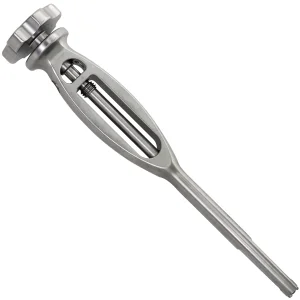
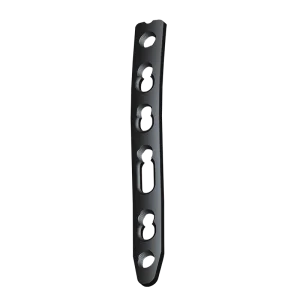
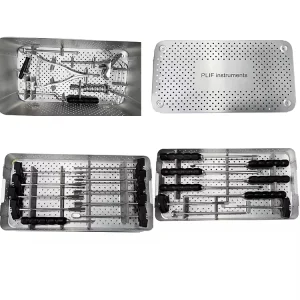
Founded in 2016, Virelox Medical Devices Co., Ltd. has established itself as an industry-leading orthopedic manufacturer specializing in high-performance biomaterials.
Virelox Medical Devices Co., Ltd. operates under the brand "Virelox", delivering state-of-the-art orthopedic implants and spinal stabilization technologies to global hospitals, distributors, and orthopedic clinics. Driven by research and optimized for surgical efficiency, our product portfolio spans lumbar interbody fusion cages, trauma locking plates, and custom-designed titanium spinal rod systems. Our commitment is simple: providing zero-defect medical implants that conform to rigorous international regulatory standards (ISO 13485) and support long-term patient recovery.
Undergoing rigid vertical integration from raw medical-grade titanium bars to micro-polished and laser-marked final packages.


Our facility features state-of-the-art milling machines, wire-cutting machinery, and high-precision CNC lathes to guarantee tolerances down to 0.005mm.


With 65 dedicated QA professionals and physical-chemical test labs, we inspect every structural implant for structural integrity and fatigue life.


| Quality Dimension | Inspection Equipment Utilized | Clinical Test Standard Met | Industrial Target Goal |
|---|---|---|---|
| Biomechanical Fatigue | Dynamic Axial & Torsional Fatigue Tester | ASTM F1717 / ASTM F2706 | Exceeding 5 Million Cycles without Fracture |
| Material Composition | Direct Reading Spectrometer | ASTM F136 (Ti-6Al-4V ELI) | High-Purity Grade 5 Titanium Alloy |
| Dimensional Tolerances | 3D CMM & Optical Projectors | ISO 286 ISO System of Limits & Fits | Accuracies mapping up to ±0.005mm |
| Surface Topography | Roughness Profilometer | ISO 4287 Surface Profile Standards | Ra ≤ 0.4 μm for clean osseointegration interfaces |
Exploring how Grade 5 ELI titanium systems optimize load sharing and prevent mechanical failures under intense physiological stress.
Titanium spinal rods provide high yield strength and contouring capability, enabling orthopedic surgeons to realign abnormal spine curvatures while maintaining the elastic modulus necessary to prevent junctional kyphosis.
Used in combination with PLIF/TLIF interbody cages, titanium rods rigidify segment motion, providing the mechanical stabilization needed to promote solid interbody fusion without stress shielding adjacent bones.
In cases of high-impact spinal trauma, immediate pedicle screw system stabilization is critical. Our robust 5.0mm to 6.0mm rod configurations provide secure fixation even in severely comminuted fractures.
The biomechanical behavior of spinal constructs relies heavily on the implant material. Titanium Grade 5 ELI (Extra Low Interstitial), designated as ASTM F136, offers an exceptional strength-to-weight ratio and superior biocompatibility compared to historical stainless steel alloys. Its elastic modulus is much closer to that of human cortical bone, reducing stress-shielding, which can lead to bone resorption around the implants. Consequently, clinical revision rates drop significantly, ensuring patient safety and reduced hospital liabilities.
The transformation of spine surgery through surface coatings, smart alloys, and customized additive manufacturing pathways.
Integrating Electron Beam Melting (EBM) and Direct Metal Laser Sintering (DMLS) to produce porous titanium lattices that stimulate rapid osteogenesis and direct bone ingrowth directly into the implant structural body.
Development of nano-crystalline silver and hydroxyapatite (HA) surface modification techniques to minimize surgical site infections (SSI) and enhance early-stage chemical bonding with surrounding host tissue.
Researching piezoelectric micro-sensors embedded within titanium rod frameworks to track in-vivo spinal loads and wireless diagnostic fusion progress tracking for real-time postoperative patient monitoring.
How Virelox leverages a massive domestic infrastructure and partner ecosystem to slash lead times and guarantee cost efficiency.
With over 850 certified upstream and downstream partners located in regional medical supply hubs, Virelox accesses premium titanium raw materials, precise surface treatment providers, and certified sterilization facilities within a 100-mile radius. This clustering dramatically reduces logistic overhead and raw material lead times.
By standardizing CNC machining processes and integrating digital design workflows, we offer medical distributors customizable OEM/ODM branding options without staggering minimum order quantities. We successfully balanced premium manufacturing with competitive international pricing, exporting $8.5 million in surgical gear annually.
Navigating MDR, FDA 510(k), and custom local import clearances to secure seamless product registration and logistics.
To operate effectively in international medical markets, clinical implants must strictly comply with local regulatory bodies. Virelox provides full regulatory technical dossiers (CE, ISO 13485) and documentation support to ease local market registrations. Whether registering class III implantable medical devices in Europe or submitting import compliance paperwork in Southeast Asia and South America, our compliance team works directly with your local distributors to clear customs and ensure safety standards are fully proven.
Providing expert answers to key technical questions about orthopedic titanium implants and manufacturing standards.
Grade 5 Titanium ELI (ASTM F136) contains alloying elements (Aluminum and Vanadium) which drastically improve tensile strength and fatigue limit compared to Commercially Pure (CP) titanium. CP titanium is commonly reserved for dental implants or bone plates requiring high malleability, whereas spinal load stabilization demands the extreme mechanical properties of Grade 5 titanium.
ISO 13485 governs our entire design-to-delivery lifecycle. It guarantees comprehensive raw-material tracking, clean-room environmental monitoring, and detailed inspection records. This system ensures every single spinal rod shipped carries a traceable lot number linked directly to its original physical-chemical testing certificate.
Our spinal fixation systems undergo rigorous dynamic testing matching ASTM F1717 guidelines. This includes static compression bending, tension testing, and dynamic fatigue trials to determine if the implant assembly can survive continuous cyclic loading over millions of cycles simulating human trunk motion.
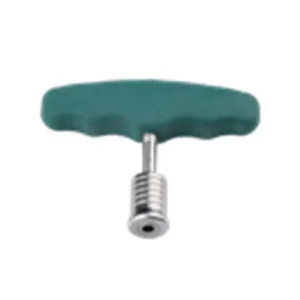
Yes, we have high-performance OEM/ODM capabilities. Backed by 120 dedicated R&D engineers and advanced CAD design workstations, we can modify spinal rod diameters, screw thread depths, and instrumentation handles to fulfill custom surgical styles or specific localized clinical needs.
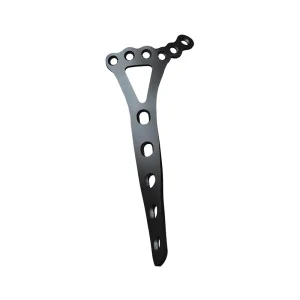
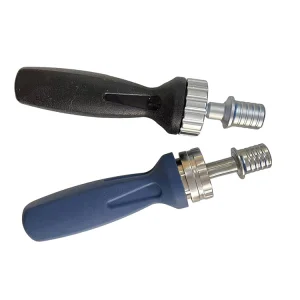
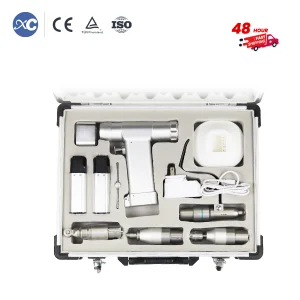
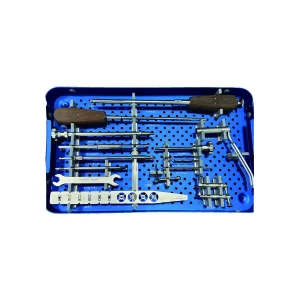
Browse our complete catalog of specialized orthopedic implants and surgical instruments designed for diverse medical applications.
 Virelox