For global buyers, selecting Maxillofacial Plating Systems is not merely a purchasing decision. It affects surgical access, fixation stability, operating time, and patient recovery. A reliable system must perform consistently across complex facial fractures, reconstructive procedures, and different hospital environments.
“Implants should respect anatomy, support function, and disappear from the patient’s daily awareness,” says Dr. Daniel J. Meara, a craniofacial and maxillofacial surgery specialist. This principle remains practical. Surgeons need plates that contour smoothly around the orbital rim, mandible, or midface. They also need screws that engage predictably, instruments that feel balanced, and packaging that supports sterile workflow. Small details matter.
Global procurement adds another layer. Buyers must evaluate material quality, dimensional accuracy, sterilization compatibility, technical documentation, and supplier responsiveness. Regulatory expectations differ between markets. That makes traceability essential. So does transparent communication.
Performance comes first.
Yet no system is perfect. A plate may fit one anatomy beautifully and require adjustment in another. A low price may also conceal training needs, limited stock, or weaker after-sales support. These risks deserve honest review, not polished promises.
The strongest purchasing decision combines clinical experience with engineering evidence. It considers surgeon feedback, testing records, delivery reliability, and long-term service. Maxillofacial Plating Systems should support careful decisions, not replace them. For international buyers, trust is built through measurable quality, clear information, and consistent results in real operating rooms.
Understanding Maxillofacial Plating Systems and Their Clinical Purpose
Why Choose Maxillofacial Plating Systems for Global Buyers?
Maxillofacial plating systems support the surgical stabilization of facial bones after trauma, reconstruction, or corrective procedures. Their clinical purpose is simple: maintain alignment while healing progresses. Surgeons may use plates and screws around the jaw, cheekbone, orbit, or midface. Each area presents different thickness, movement, and soft-tissue conditions. A suitable system should offer predictable fixation, accurate fit, and manageable handling during surgery. Material quality also matters. Biocompatible metals, consistent dimensions, and reliable surface finishing can reduce avoidable complications. Still, no system is universally ideal. Patient anatomy varies, and clinical judgment remains essential.
Tips: Check screw compatibility, plate profiles, imaging visibility, and sterilization instructions. Ask for technical files, test data, and regulatory documentation before purchasing. Training support can also reveal practical limitations that product brochures often miss.
For global buyers, dependable supply is only one part of a responsible decision. Procurement teams should review manufacturing controls, traceability, packaging integrity, and local registration requirements. Surgeons may also assess whether instruments provide clear access through small incisions.
In actual use, a slightly flexible plate may help contouring, but excessive bending can weaken fixation. That trade-off deserves careful evaluation. Buyers should compare documented clinical evidence with feedback from experienced surgical teams. Price alone can be misleading. A lower initial cost may not reflect instrument quality, revision risks, or long-term availability.
Industry experience teaches a modest lesson: the best choice is usually the one that fits the procedure, the patient, and the healthcare setting.
Key Components and Materials Used in Maxillofacial Plating
Why Choose Maxillofacial Plating Systems for Global Buyers?
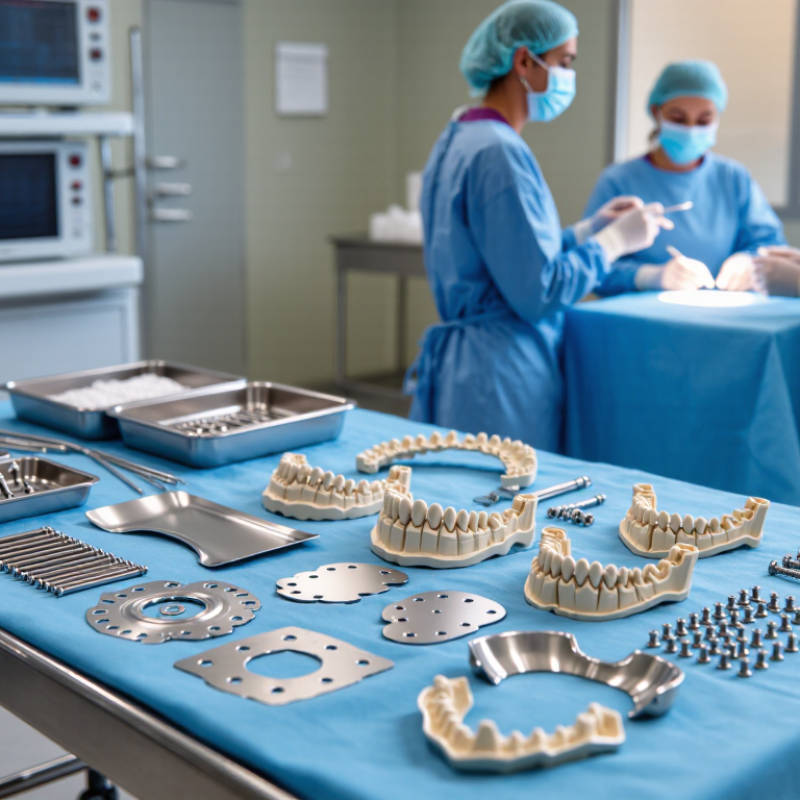
A dependable maxillofacial plating system begins with precise components. Plates support fractured bone across the mandible, midface, and orbital regions. Their shapes may include straight, curved, L-shaped, and pre-contoured designs. Good contouring can reduce bending during surgery and improve contact with bone.
Titanium remains widely used because it combines strength, corrosion resistance, and biocompatibility. Commercially pure titanium and titanium alloys serve different mechanical needs. Screws may be locking or non-locking, depending on the fixation method. Small diameters help protect delicate anatomy, but they also require careful handling. Mesh plates can support larger defects and complex contours. They need accurate trimming without creating sharp edges.
Some systems use resorbable polymers, including PLLA or PLGA. These materials may reduce the need for later removal in selected cases. However, their strength, degradation profile, and clinical suitability require close evaluation. No material is perfect. That point is easy to overlook.
Global buyers should examine more than a product catalog. They should verify material certificates, biocompatibility data, sterilization validation, traceability, and regulatory documentation. Compatibility between plates, screws, drivers, and cutting instruments also matters. A mismatched driver can damage a screw head. Local surgical practice should guide the final selection. Product quality matters, but training and reliable technical support matter too.
How Maxillofacial Plating Systems Support Surgical Reconstruction
Maxillofacial plating systems support reconstruction by stabilizing fractured or surgically reshaped facial bones. During clinical use, surgeons assess bone thickness, fracture pattern, soft-tissue coverage, and occlusion before selecting plates and screws. A low-profile plate can reduce prominence beneath thin skin. Contoured designs may follow the zygoma, mandible, or orbital rim more closely. Fit matters. Poor adaptation can create tension, interfere with closure, or shift alignment during healing.
Reliable systems offer predictable hole geometry, secure screw engagement, and instruments that feel controlled in gloved hands. Material choice also matters. Titanium is widely used for its strength, corrosion resistance, and tissue compatibility, but it is not a universal answer. Patient anatomy, imaging, revision plans, and local surgical practice still guide decisions. Experienced teams verify traceability, sterilization status, and packaging integrity before use. Small details prevent avoidable delays.
For global buyers, technical documentation should explain dimensions, indications, cleaning limits, and fixation options in clear language. Training support is valuable when instruments differ across facilities. Yet no plating system replaces surgical judgment. Even an elegant design may perform poorly when a plate is over-bent or screw length is guessed. No system is perfect. Careful planning, trial fitting, and postoperative imaging help teams identify problems early and refine future reconstruction.
Factors Global Buyers Should Evaluate Before Purchasing
Global buyers should evaluate maxillofacial plating systems through clinical fit, manufacturing quality, and supply reliability.
A system must support the anatomy surgeons treat most often, including the mandible, midface, and orbital region. Plate profiles should feel smooth against soft tissue. Screw sizes should be easy to identify under operating-room pressure.
Small details matter.
Ask for material certificates, biocompatibility evidence, and documented quality controls.
Titanium composition, surface finish, and mechanical strength deserve careful review. Lot traceability can help teams investigate unexpected problems. Packaging should protect sterile components from moisture, impact, and handling damage.
Buyers should also verify sterilization instructions and shelf-life data.
Do not assume that one certificate satisfies every market. Local registration requirements may differ.
Supply continuity is another practical concern.
Review production capacity, minimum order quantities, replacement policies, and delivery records. A delayed plate can disrupt surgical planning. Technical training also matters, especially when instruments and screws have specific handling steps. Request clear surgical technique guides and responsive engineering support.
I would test the ordering process before signing a large contract.
No checklist is perfect. Some evaluations focus too heavily on price and overlook instrument compatibility. That weakness can appear later, during a demanding procedure. Teams should invite surgeons, procurement staff, and regulatory specialists to review the system together.
Quality, Compliance, and Supply Considerations for International Buyers
Why Choose Maxillofacial Plating Systems for Global Buyers?
Quality, Compliance, and Supply Considerations for International Buyers
International buyers need more than a polished product catalogue. A reliable maxillofacial plating system should show consistent plate thickness, smooth edges, accurate screw threads, and secure packaging. These details affect handling in the operating room. They also reveal how carefully the system is manufactured. Buyers should request inspection records, material specifications, and batch-level traceability. A clear quality process builds confidence.
Compliance requires practical evidence. Manufacturers should maintain an effective quality management system, such as ISO 13485 certification, where applicable. Risk management, biocompatibility evaluation, sterilization validation, and labeling controls deserve close review. Requirements differ across markets. A certificate alone is not enough. Importers should confirm registration pathways, language requirements, technical files, and post-market procedures with qualified regulatory professionals. Small documentation gaps can delay an otherwise sound shipment.
Supply performance matters just as much. Buyers should assess production capacity, minimum order quantities, forecast flexibility, and backup sources for critical materials. Ask how the supplier manages nonconforming products and corrective actions. Request realistic lead times, not optimistic estimates. Packaging should withstand long transport, humidity changes, and repeated customs handling. No supplier is flawless. What matters is transparent communication, measurable controls, and a willingness to examine weak points before they affect patients or purchasing schedules.
FAQS
Plates can support fractures in the mandible, midface, and orbital regions. Their shapes include straight, curved, L-shaped, and pre-contoured designs.
Titanium offers strength, corrosion resistance, and biocompatibility. Commercially pure titanium and titanium alloys serve different mechanical needs. No material is perfect.
Locking screws connect with threaded plate holes for stable fixation. Non-locking screws press the plate against bone. The fixation method should match surgical needs.
Mesh plates can support larger defects and complex anatomical contours. They may require accurate trimming during surgery. Sharp edges must be avoided.
Materials such as PLLA or PLGA may reduce later removal in selected cases. Their strength, degradation time, and clinical suitability require careful evaluation. That choice is not simple.
Buyers should check plate thickness, smooth edges, accurate threads, and secure packaging. They should also request material specifications, inspection records, and batch traceability. A polished catalogue proves little.
Buyers should review biocompatibility data, sterilization validation, risk management, labeling controls, and technical files. Market requirements can differ by country. A certificate alone is not enough.
Confirm compatibility among plates, screws, drivers, and cutting instruments. A mismatched driver can damage a screw head. Assess production capacity, lead times, order quantities, packaging, and backup materials. Forecasts can still fail.
Conclusion
Maxillofacial Plating Systems are essential tools in reconstructive and trauma surgery, providing stable support for fractured or surgically altered facial bones. By helping maintain anatomical alignment during healing, these systems can contribute to functional recovery, facial symmetry, and predictable surgical outcomes. Their main components typically include plates, screws, fixation accessories, and instruments made from biocompatible materials such as titanium or other clinically approved alloys. Designs may vary according to anatomical location, surgical technique, and the level of support required.
For global buyers, selecting a suitable system requires careful evaluation of material quality, design flexibility, surgical usability, and compatibility with intended procedures. Buyers should also review manufacturing consistency, quality-control processes, regulatory documentation, sterilization information, packaging, and traceability. Reliable supply capacity, clear technical communication, stable delivery schedules, and responsive after-sales support are equally important for international procurement. A well-evaluated Maxillofacial Plating Systems solution can help healthcare providers achieve dependable clinical performance while supporting safe, compliant, and efficient purchasing decisions.

 Virelox