Choosing among China’s Posterior Pedicle Screw Systems manufacturers takes more than comparing catalog prices. Surgeons and purchasing teams must examine screw design, rod compatibility, material traceability, sterilization controls, and evidence supporting the intended use. A small detail matters: the feel of a set screw during tightening can affect workflow, while unclear compatibility information can create avoidable delays.
The market is expanding, but broad figures need careful interpretation. Grand View Research estimated the global spinal implants market at approximately US$10.2 billion in 2023 and forecast continued growth through 2030. That figure covers more than posterior screw systems, so it should not be treated as a direct measure of this product segment. Market growth also does not prove that any individual device performs well. Clinical evidence and documented quality processes still matter.
Spine surgeon Alexander R. Vaccaro is a relevant expert voice in this field. To avoid presenting an unverified quotation as verbatim, here is his clinical principle in paraphrase: “Implant selection should fit the patient’s anatomy and the surgical objective.” A useful reminder. This guide compares leading Chinese manufacturers through product range, manufacturing capability, quality documentation, and export experience. Yet no supplier profile can replace independent verification. Some company claims are difficult to compare directly; that deserves a closer look.
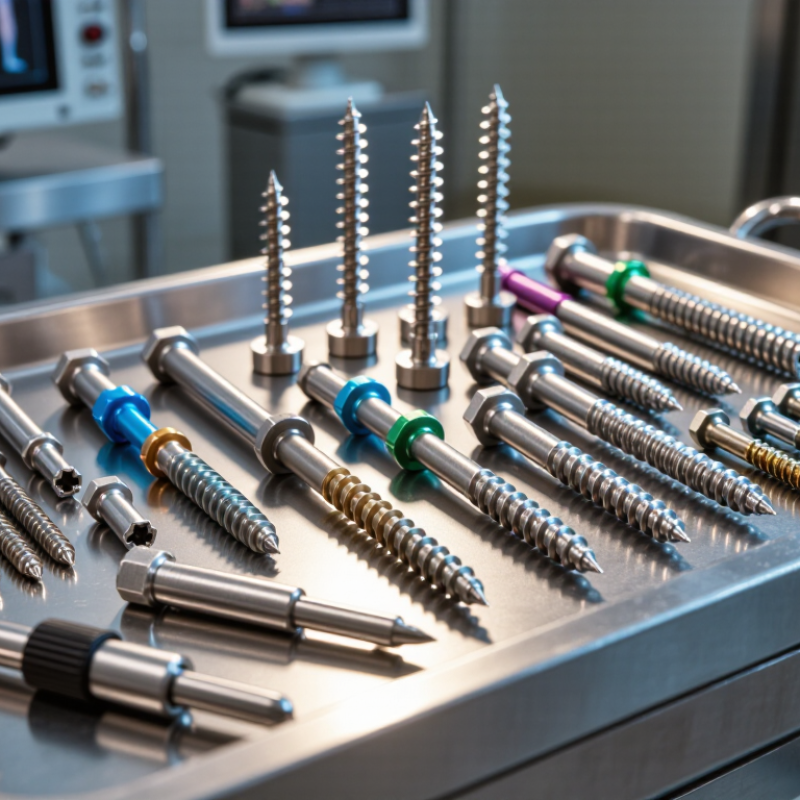
Posterior pedicle screw systems are implants used to stabilize the spine from the back. Each screw passes through a vertebra’s pedicle, the strong bridge of bone between its body and posterior elements. Surgeons connect the screws with rods to limit unwanted movement while a fusion heals. Small parts matter. Screw diameter, length, and trajectory must match the patient’s anatomy and the planned construct.
Placement requires careful planning and imaging. A systematic review by Kosmopoulos and Schizas in Spine (2007) analyzed 35,630 screws and reported average placement accuracy of 94.3%; accuracy varied by technique and spinal region. That figure is useful context, not a guarantee for an individual patient. CT scans can reveal narrow pedicles, while intraoperative imaging helps assess screw position. Still, a number on paper is not a promise. A system’s performance depends on anatomy, surgical experience, bone quality, and verification methods. It is also worth questioning whether added hardware is needed in every case; the decision should reflect the diagnosis and a patient-specific treatment plan.
How Are Posterior Pedicle Screw Systems Designed and Made?
Design begins with spinal anatomy and the forces a screw-rod construct must withstand. Engineers specify screw diameter, length, thread pitch, and head geometry, then assess how the rod connects and locks. A 2023 Global Burden of Disease analysis estimated that 619 million people had low back pain in 2020, with cases potentially reaching 843 million by 2050. This burden makes dependable implant design important, but demand alone cannot determine a safe design. Fit matters.
Manufacturers commonly machine implant-grade titanium alloy or stainless steel into screws, rods, and connectors. Cutting tools shape the threads and interfaces; inspection checks dimensions, surface finish, and locking features. Small burrs matter. Cleaning and validated sterilization follow, with material and process records kept for traceability. Testing also matters: ASTM F1717 provides a fatigue-testing method for spinal implant constructs, using a vertebrectomy model. Results help compare construct performance under controlled conditions, not predict every patient outcome. A polished CAD model is not enough; real-world anatomy and surgical handling can expose design weaknesses. Even careful quality control has limits, so each production step needs documented verification.
In China, posterior pedicle screw systems are made mainly by orthopedic implant manufacturers with in-house metalworking and quality-control processes. Some design the screw-rod system and instruments; others produce components under contract for a device-registration holder. The boundary is not always obvious. A seller may not be the factory. Check the legal manufacturer, NMPA registration details, production site, and registered system components, including screws, rods, connectors, and instruments.
The World Health Organization’s 2023 low-back-pain fact sheet estimates that 619 million people worldwide had low back pain in 2020, with 843 million projected by 2050. This is a health-burden indicator, not evidence of spinal implant sales. When screening Chinese suppliers, review NMPA records, ISO 13485 certificates, material specifications, and validated cleaning and packaging controls. Ask for titanium-alloy grades, screw size ranges, rod compatibility, fatigue-test methods, and product traceability. A polished catalogue is insufficient. Independent factory audits can reveal gaps between registered designs and production practice.
The adult spine typically has 7 cervical, 12 thoracic, and 5 lumbar vertebrae. These anatomical counts provide context for evaluating system coverage; they do not represent manufacturer numbers, product availability, or a ranking.
Comparing Chinese manufacturers of posterior pedicle screw systems takes more than checking catalog dimensions. Start with the intended anatomy, surgical approach, and screw sizes your clinical team routinely uses.
Ask for material specifications, lot traceability, and documented inspection steps for screws, rods, connectors, and instruments. Review fatigue, pullout, and corrosion test data, and check how each test reflects intended use. A polished brochure is not evidence.
Not enough.
Request controlled technical documents and confirm that the listed components work together as supplied.
Look closely at manufacturing consistency: thread finish, locking-cap engagement, and instrument fit can reveal practical differences.
Ask how nonconforming parts are contained, design changes recorded, and production lots traced. Verify quality-system documents and market-specific approvals through relevant official channels; paperwork alone cannot establish clinical suitability.
Compare packaging, sterilization information, lead times, complaint handling, and technical training.
Fit matters.
A spreadsheet can make the choice seem simpler than it is, and even a careful review may miss handling differences. Have qualified clinicians and procurement staff assess samples against documented criteria.
A low unit price cannot replace dependable supply or responsive support.
China’s posterior pedicle screw manufacturers should be assessed against the standards and regulatory requirements of each intended market. In China, registration and production oversight fall under the National Medical Products Administration (NMPA). A quality system aligned with YY/T 0287-2017, China’s adoption of ISO 13485:2016, supports controlled design, manufacturing, and traceability. ISO’s 2022 Survey recorded more than 31,000 ISO 13485 certificates worldwide. That figure shows broad adoption, not proof that any particular factory’s processes are effective. A certificate is not the implant.
Risk management should follow ISO 14971:2019, with documented hazards, controls, and residual-risk review. For mechanical evaluation, ASTM F1717 specifies tests using vertebrectomy models, while ASTM F543 covers metallic bone-screw testing. These methods can help assess construct strength and screw performance; they do not replace regulatory review or clinical evidence. Ask for test reports tied to the exact material, dimensions, and manufacturing site. Check lot-level records for material certificates, sterilization validation, and inspection results. Look closely at thread surfaces and connection interfaces. Small defects matter. A polished report can still leave gaps. Standards evolve, and I would verify each edition’s current status before qualifying a supplier.
It uses screws placed through vertebral pedicles and rods attached from the back. The construct limits unwanted movement while spinal fusion heals.
Pedicles vary in width and shape. Screw diameter, length, and trajectory need to suit the patient’s anatomy and planned construct. Small parts matter.
One review of 35,630 screws reported average placement accuracy of 94.3%. Accuracy varied by technique and spinal region, so this figure cannot promise an individual result.
CT scans can show narrow pedicles before surgery. Intraoperative imaging helps assess screw position, though imaging does not remove every uncertainty.
Engineers consider screw diameter, length, thread pitch, and head shape. They also assess how rods connect and lock. Fit matters.
Screws, rods, and connectors are commonly made from implant-grade titanium alloy or stainless steel. Material choice alone does not ensure a good outcome.
Machining forms the threads and connections. Inspections check dimensions, surface finish, and locking features; cleaning and validated sterilization follow. Records support traceability.
A recognized test method compares constructs under controlled loading. It cannot predict every patient outcome. A polished design may still face challenges in real anatomy.
Not necessarily. The decision should reflect the diagnosis and a patient-specific treatment plan. It is worth asking whether each added component is needed.
Posterior Pedicle Screw Systems are spinal fixation devices designed to stabilize the spine and support alignment during treatment. Their design typically brings together screws, connecting rods, and compatible components, with attention to strength, fit, materials, and ease of surgical placement. Manufacturing involves careful engineering, material selection, machining, inspection, and packaging so that components meet defined performance and safety requirements.
When evaluating manufacturers in China, buyers can compare product specifications, manufacturing capabilities, quality controls, technical documentation, and the consistency of available product options. It is also important to review applicable quality-management systems and regulatory requirements for the intended market, and to confirm that claims are supported by appropriate documentation. A structured comparison helps readers understand how these systems are made and assessed without relying on brand names alone.

Virelox