The global orthopedic device market is expanding, but cancellous screw purchasing remains highly specification-driven. Fortune Business Insights valued the orthopedic implants market at approximately USD 47.5 billion in 2023. It forecasts continued growth through 2030. MarketsandMarkets also identifies trauma fixation as a major orthopedic device segment. These figures describe broader markets, not Cancellous Screws alone. That limitation matters.
For global buyers, manufacturer evaluation should begin with clinical fit and manufacturing evidence. Cancellous Screws typically require deep, widely spaced threads for purchase in softer bone. Buyers should compare titanium and stainless-steel options, thread profiles, head designs, sterile packaging, and instrument compatibility. ISO 13485 certification is valuable evidence of controlled production. However, certification alone does not prove consistent clinical performance. Lot traceability, dimensional inspection, fatigue testing, and transparent regulatory documentation deserve equal attention.
The AO Foundation’s founder, Maurice E. Müller, stated, “The aim of fracture treatment is to restore function, not merely to unite the fracture.” That principle remains useful when comparing leading Cancellous Screws manufacturers. A reliable supplier should connect product design with surgical outcomes, not only with catalog breadth. It should also support hospitals after delivery. Clear technical files help.
This guide examines manufacturers serving international buyers, including their production capabilities, quality systems, product ranges, and export experience. No ranking is perfect. Procurement teams should still verify current certificates, local approvals, clinical evidence, and delivery performance before signing contracts. Small details often decide the result.
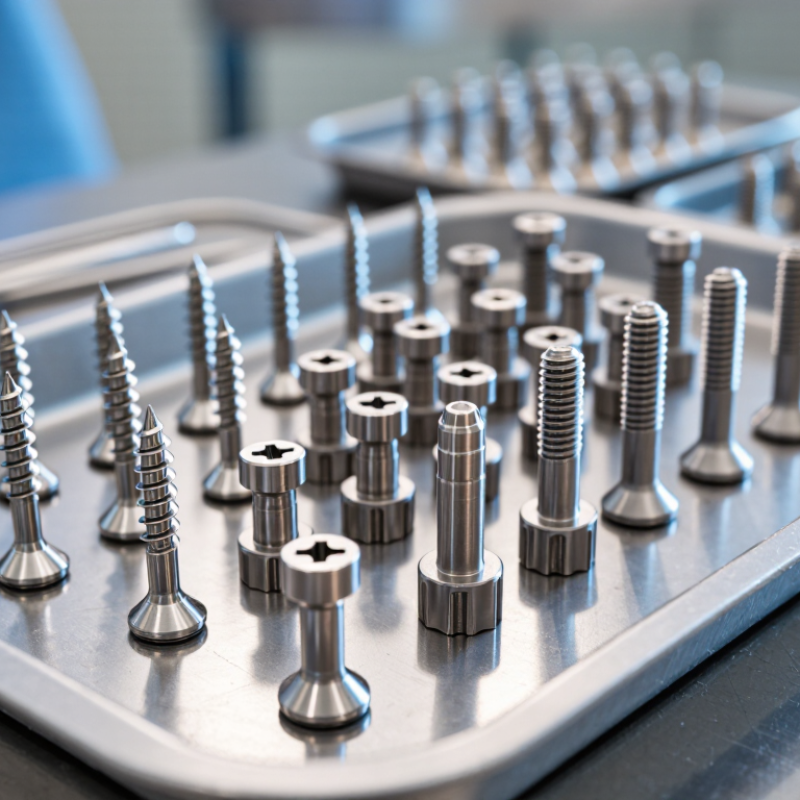
Top Cancellous Screws Manufacturers for Global Buyers
What Cancellous Screws Are and How They Differ from Cortical Screws
Cancellous screws are designed for softer, porous bone, especially in metaphyseal areas. Their threads are deeper and more widely spaced than cortical screw threads. This design helps the screw engage trabecular bone, where the structure resembles a fine honeycomb. Many cancellous screws also have a larger thread diameter and a relatively narrow core. That balance can improve purchase without requiring excessive insertion force. The geometry matters.
Cortical screws serve a different purpose. They are commonly used in denser cortical bone along the shaft of a long bone. Their threads are finer, closer together, and usually more uniform along the shaft. Many are fully threaded, while cancellous screws may be partially threaded to create compression across a fracture. However, this distinction is not absolute. Some systems use specialized thread patterns for mixed bone conditions.
For global buyers, technical documents deserve close attention. Check thread dimensions, material grade, head design, sterile or non-sterile supply, and traceability records. Packaging should protect the threads from damage during transport. Surgical compatibility also matters; the driver recess must match the intended instrument. A screw that looks suitable may still perform poorly if its length, pitch, or thread profile is mismatched. That mistake is easy to overlook. Regulatory documentation and quality-system certification should be reviewed before purchasing, not after delivery.
Cancellous screws are designed for softer, porous bone, where thread purchase matters more than extreme compression. Their deep, wide-spaced threads create stronger contact with cancellous bone. The larger pitch helps the screw advance efficiently with fewer turns. A partially threaded shaft can provide interfragmentary compression across a fracture line. Fully threaded versions support fixation when compression is not required. Cannulated designs also allow placement over a guidewire. Small details matter.
Common materials include medical-grade stainless steel and titanium alloys such as Ti-6Al-4V. Stainless steel offers high strength and familiar handling during surgery. Titanium is lighter and generally produces fewer imaging artifacts. Its elastic behavior is closer to bone, although that does not make it ideal for every case. Some screws use surface treatments, including anodized finishes or hydroxyapatite coatings, to influence handling or bone interaction. Coatings require careful quality control.
Global buyers should examine thread geometry, core diameter, tip design, drive recess, and washer compatibility. Material certificates and dimensional inspection records should be available. ISO 13485-based manufacturing systems can support consistent production, but certification alone does not prove clinical suitability. That point is easy to overlook. Packaging, traceability, sterilization status, and fatigue testing deserve equal attention. Selection remains imperfect because bone quality, anatomy, and surgical technique vary widely. A screw that performs well in dense specimens may behave differently in fragile bone.
How to Evaluate Cancellous Screw Manufacturers Worldwide
Evaluating cancellous screw manufacturers requires more than comparing prices. WHO’s Global Atlas of Medical Devices reports over two million medical-device types worldwide, making supplier verification essential. Check whether the manufacturer operates under ISO 13485 and maintains documented risk controls. ISO’s 2023 Survey also records tens of thousands of ISO 13485 certificates globally. A certificate helps, but it does not prove consistent screw quality.
Ask for material certificates, dimensional inspection records, coating specifications, and sterilization validation where applicable. Titanium alloy and stainless steel screws should match declared international standards. Review thread geometry, core diameter, pitch, and insertion torque data. Independent laboratory testing is valuable. So are production samples.
Request traceability from raw material heat numbers to final packaging. Confirm lot coding, shelf-life evidence, and complaint-handling procedures. FDA’s Medical Device Reporting program shows why post-market monitoring matters; manufacturing quality cannot be judged only before shipment. Examine recall history and corrective-action records through official regulatory databases. Be cautious with polished brochures. They can hide weak evidence.
Audit manufacturing areas when possible. Observe machining cleanliness, gauge calibration, operator training, and nonconforming-product controls. A remote audit is useful, but incomplete. One practical concern is often overlooked: communication after a specification change. Delayed answers may signal weak document control. Price still matters, especially for hospitals, yet unusually low quotations deserve technical questions. I would not accept a certificate screenshot alone. Supplier evaluation remains partly imperfect, so record assumptions and review them after every shipment.
| Evaluation Dimension | Relevant Technical Data | Evidence Global Buyers Should Request | Recommended Purchasing Benchmark |
|---|---|---|---|
| Product Application | Cancellous screws are designed for fixation in relatively low-density cancellous bone. Common applications include metaphyseal fixation, epiphyseal fixation, small-fragment systems and selected osteoporotic fixation procedures. | Intended-use statement, surgical technique, indications for use, contraindications and compatibility information for the complete fixation system. | Choose a supplier whose stated indication matches the intended anatomy, surgical approach and target market. |
| Material Selection | 316L stainless steel Ti-6Al-4V ELI Austenitic implant stainless steel and wrought titanium alloys are widely used metallic implant materials. | Material certificate, heat or lot traceability, chemical composition and conformity to the applicable material specification, such as ISO 5832 series or ASTM F136 where applicable. | Require full material traceability from raw material lot to finished-device lot; do not accept “medical grade” as the only material description. |
| Thread Geometry | Key variables include major diameter, minor diameter, thread pitch, thread depth, thread length, core design and tip geometry. Cancellous screws commonly use a relatively coarse, deep thread profile compared with cortical screws. | Controlled engineering drawings, tolerance tables, sample inspection reports and dimensional inspection equipment records. | Approve only drawings with defined tolerances and a documented fit with the specified plate, washer, driver and drill system. |
| Fully or Partially Threaded Design | Fully threaded screws provide purchase along the threaded section. Partially threaded screws can provide interfragmentary compression when the unthreaded shaft and thread length are correctly selected. | Product catalog, thread-length options, compression guidance and validated surgical technique. | The available thread configurations should cover the planned fracture patterns and fixation methods without requiring unapproved modifications. |
| Size Range | Commercial systems vary by intended anatomy. Typical product portfolios may include several nominal diameters and lengths, but exact dimensions must be verified from the controlled product drawing rather than inferred from a catalog image. | Complete size matrix showing diameter, length, thread length, head dimensions, drive type and applicable instruments. | Request at least three-dimensional samples per selected size family and verify gauge fit before approving volume production. |
| Cannulated Option | Cannulated screws contain a central guide-wire channel to support more controlled placement. The channel reduces the available core cross-section and must be considered in mechanical testing. | Central-channel diameter, guide-wire compatibility, cannulation concentricity data, cleaning validation and breakage test results. | Confirm that the guide-wire size, drill system and driver are compatible with the buyer’s surgical workflow. |
| Drive Interface | Common drive configurations include hexagonal and star-shaped interfaces. The drive recess must resist stripping, cam-out and damage during insertion and removal. | Drive-interface drawing, driver compatibility statement, insertion-torque testing and stripping-torque results. | Require a defined torque margin between intended insertion torque and drive failure torque. |
| Mechanical Performance | Relevant properties include insertion torque, torsional strength, stripping torque, bending strength, pull-out performance and fatigue behavior. Results depend on geometry, material, test fixture and bone substitute. | Test protocols and reports using recognized methods, including ASTM F543 where applicable, with sample size, fixture, loading rate and acceptance criteria. | Compare suppliers only when the test method, specimen configuration and acceptance criteria are equivalent. |
| Surface Finish | Surface condition affects corrosion resistance, cleanability and tissue interaction. Common finishes include polished, passivated, electropolished, blasted or anodized surfaces, depending on material and design. | Surface-finish specification, roughness range, passivation or anodizing records, contamination controls and visual inspection criteria. | Use a controlled surface-finish specification with measurable limits; avoid approving samples based only on visual appearance. |
| Biocompatibility | Biological evaluation is based on the finished device, patient contact type, contact duration and manufacturing process. ISO 10993 provides the framework for biological evaluation of medical devices. | Biological evaluation plan, risk assessment and applicable test reports for cytotoxicity, sensitization, irritation or other endpoints justified by the device risk assessment. | Request evidence for the finished product and final process, not only for the raw alloy. |
| Corrosion and Chemical Safety | Implant metals should be evaluated for corrosion resistance, surface contamination and potentially harmful residues introduced during machining, cleaning or passivation. | Corrosion testing where applicable, cleaning validation, passivation records, residue limits and particulate-control data. | Require documented controls for machining fluids, metal particles, detergents and process residues. |
| Quality Management System | ISO 13485 specifies quality-management requirements for organizations involved in the medical-device life cycle. | Current ISO 13485 certificate, certification scope, issuing body, audit status, nonconformity history and supplier-control procedure. | Verify the certificate directly with the certification body and confirm that the scope covers implantable orthopedic devices. |
| Regulatory Documentation | Market access requirements differ by jurisdiction. The European Union uses Regulation (EU) 2017/745, while the United States uses an FDA device classification and applicable premarket or exemption pathway. | Device classification rationale, technical documentation index, declaration or clearance information where applicable, labeling and post-market surveillance procedures. | Evaluate regulatory evidence for the exact product family, material, configuration and intended use—not for a different device category. |
| Sterile or Non-Sterile Supply | Implant screws may be supplied sterile or non-sterile. Sterile products require a validated sterilization process and packaging system that maintains sterility through the labeled shelf life. | Sterilization method, process validation, packaging validation, sterility assurance information, expiry period and storage conditions. | For sterile supply, require lot release records and packaging-integrity evidence; for non-sterile supply, require validated reprocessing instructions. |
| Packaging and Traceability | Each implant should be identifiable by product reference, size, lot or batch number and applicable expiry information when supplied sterile or otherwise required by regulation. | Packaging drawings, label samples, UDI or equivalent identification data where required, lot genealogy and complaint-traceability procedure. | Approve packaging only after transport simulation, seal testing and label verification are complete. |
| Instrument Compatibility | Reliable use depends on matching drivers, drill bits, guide wires, depth gauges and torque-limiting instruments. Interface mismatch can cause recess damage or inaccurate placement. | Instrument list, interface drawings, compatibility matrix, sterilization instructions and surgical technique documentation. | Purchase the screw and instrument interfaces as a controlled system unless compatibility has been formally verified. |
| Manufacturing Process Control | Important operations may include cold heading or machining, thread rolling or cutting, cannulation, deburring, passivation, cleaning, inspection and packaging. | Process flow chart, validated process parameters, in-process inspection plan, equipment calibration and final-release criteria. | Prioritize suppliers with objective controls for thread formation, burr removal, cannulation and cleaning rather than relying on final visual inspection alone. |
| Inspection and Sampling | Critical-to-quality characteristics include thread dimensions, head dimensions, drive geometry, straightness, surface defects, burrs, cannulation and marking accuracy. | Inspection plan, sampling standard, calibrated measurement records, certificate of conformity and nonconforming-product procedure. | Define acceptance criteria before ordering and require first-article inspection for each new size or design change. |
| Supply Capacity and Lead Time | Lead time is affected by raw-material availability, tooling, validation, sterilization, packaging and regulatory release. Capacity claims should be verified against actual production controls. | Capacity statement, manufacturing schedule, validated production line, safety-stock policy and historical on-time-delivery data. | Use a written service-level agreement with agreed lead time, minimum order quantity, forecast rules and escalation procedures. |
| Change Control | Changes to material source, dimensions, surface treatment, sterilization, packaging or manufacturing location can affect safety and regulatory status. | Change-notification procedure, historical change log, validation requirements and customer-approval workflow. | Require advance written notification and documented impact assessment before any change to a qualified product. |
| Cost and Total Ownership | Unit price is only one cost component. Tooling, inspection, sterilization, packaging, instruments, regulatory documentation, inventory and field complaints also affect total cost. | Itemized quotation, tooling ownership terms, validation charges, minimum order quantities, warranty terms and replacement policy. | Compare suppliers using landed cost and lifecycle risk, not unit price alone. |
| Supplier Qualification Score | A balanced assessment can combine technical conformity, regulatory readiness, quality-system maturity, delivery reliability and commercial terms. | Completed audit questionnaire, technical file review, sample evaluation, quality audit and documented corrective-action response. | Use a weighted scorecard; treat regulatory gaps, missing traceability and failed mechanical tests as disqualifying risks. |
Leading cancellous screw manufacturers compete through engineering discipline, not catalogue size. A 2024 Grand View Research report estimated the global orthopedic devices market above US$47 billion in 2023, reflecting strong demand for dependable fixation systems. Within this market, experienced manufacturers typically offer coarse threads, broad pitch options, and self-tapping tips. These features can improve purchase in softer metaphyseal bone. Cannulated designs also support guidewire placement during minimally invasive procedures.
Material control is another product strength. Titanium alloys can reduce implant weight, while stainless steel remains valued for strength and cost efficiency. ASTM F543 provides recognized testing methods for metallic bone screws, including torsion and insertion performance. Manufacturers with ISO 13485-based quality systems usually provide stronger traceability, inspection records, and process control. Small details matter. Thread consistency matters.
A 2023 Fortune Business Insights report valued the orthopedic devices market at approximately US$47 billion and projected continued growth through 2030. That expansion may encourage broader screw portfolios, but growth alone proves little. Buyers should examine fatigue data, dimensional tolerances, packaging integrity, and sterilization validation. Some suppliers publish impressive pull-out values without clear testing conditions. That is a weakness worth questioning. Clinical fit, inventory reliability, and regulatory documentation often matter more than a single laboratory number. Global buyers should also confirm language support, lot tracking, and replacement availability before approving a manufacturer.
Global buyers should assess certification before comparing prices. A reliable manufacturer usually maintains a quality system aligned with ISO 13485. Risk controls should follow ISO 14971 principles. Destination markets may also require specific registration, technical files, or conformity evidence. CE marking requirements depend on the applicable European rules. Other regions may request local approvals and authorized representatives.
Ask for material certificates, dimensional inspection reports, and lot traceability records. Common materials include implant-grade titanium and stainless steel. Buyers should verify alloy standards, thread geometry, pitch accuracy, and head dimensions. Fatigue testing matters for screws exposed to repeated loading. Packaging should protect sterile barriers from moisture, crushing, and contamination. Small details matter.
Review samples before approving a large order. Check thread consistency with calibrated gauges, not visual inspection alone. Request recent production records, not only old test reports. A certificate is not proof of every batch. This is where many sourcing decisions become weak. Suppliers should explain nonconformity handling, corrective actions, and change-control procedures. Lead times need realistic capacity data, especially during demand spikes. Dual-source planning can reduce disruption, but it may complicate validation. Buyers should document that trade-off. Clear communication is often less impressive than a polished brochure, yet it reveals operational reliability.
They are designed for softer, porous bone. Deep, widely spaced threads improve purchase in cancellous bone. Small details matter.
Partially threaded screws can compress fragments across a fracture line. Fully threaded screws support fixation when compression is unnecessary. The choice depends on anatomy and technique.
Common materials include medical-grade stainless steel and titanium alloys. Stainless steel offers high strength and familiar handling. Titanium is lighter and may create fewer imaging artifacts.
Compare thread geometry, core diameter, pitch, tip shape, and drive recess. Check washer compatibility and insertion torque data. These features can affect handling.
Request material certificates, dimensional inspection records, and coating specifications. Ask for sterilization validation when applicable. A certificate screenshot alone is not enough.
Traceability should connect raw material heat numbers with final packaging. Review lot codes, shelf-life evidence, and complaint procedures. Missing records create avoidable uncertainty.
Audit machining cleanliness, gauge calibration, operator training, and nonconforming-product controls. A remote audit helps, but it remains incomplete. I would still verify samples independently.
Not always. An unusually low price deserves technical questions about materials, testing, and quality controls. Price matters, but weak evidence can become expensive later.
Cancellous Screws are specialized orthopedic fixation devices designed to achieve stable purchase in softer, porous bone. Compared with cortical screws, they typically feature deeper threads, a larger thread pitch, and a geometry suited to cancellous bone structure. Their performance depends on design details such as diameter, length, thread profile, tip shape, head configuration, and the use of biocompatible materials like stainless steel or titanium alloys. These factors influence insertion, fixation strength, handling, and compatibility with surgical techniques.
For global buyers, evaluating manufacturers requires more than comparing prices. Important considerations include engineering expertise, manufacturing consistency, material traceability, product testing, sterile or non-sterile options, and the ability to provide clear technical documentation. Buyers should also review quality management systems, applicable certifications, regulatory readiness, production capacity, lead times, packaging, and after-sales communication. A reliable supplier should offer consistent product specifications, flexible supply support, and transparent quality controls, helping healthcare organizations select suitable Cancellous Screws for different orthopedic applications.

Virelox