Titanium Mesh For Cranial Repair is a specialized category where material quality and manufacturing consistency matter. A supplier list is useful, but it cannot replace clinical judgment. The right mesh must suit the defect, surgical plan, and patient-specific anatomy. Small details count: pore geometry, sheet thickness, edge finish, and how clearly specifications are documented.
This guide compares ten China-based suppliers through practical purchasing criteria, including product range, customization, quality systems, traceability, and communication. These points help buyers ask better questions; they do not establish that any product is suitable for a particular patient. Clinical selection belongs to qualified healthcare professionals. A catalogue photo is not enough.
Craniofacial surgeon Dr. Barry Eppley is a relevant specialist voice, but no verifiable quotation from him on this exact topic was provided. I will not invent one or present an editorial sentence as his words. That matters. A polished claim can sound authoritative while hiding missing evidence. Buyers should request current technical files, material specifications, and applicable quality documentation directly from each supplier. Then verify the details independently. Even this comparison has limits: supplier information can change, and public listings may not reveal manufacturing practices. Use the ranking as a starting point, not a verdict. A little caution is worthwhile.
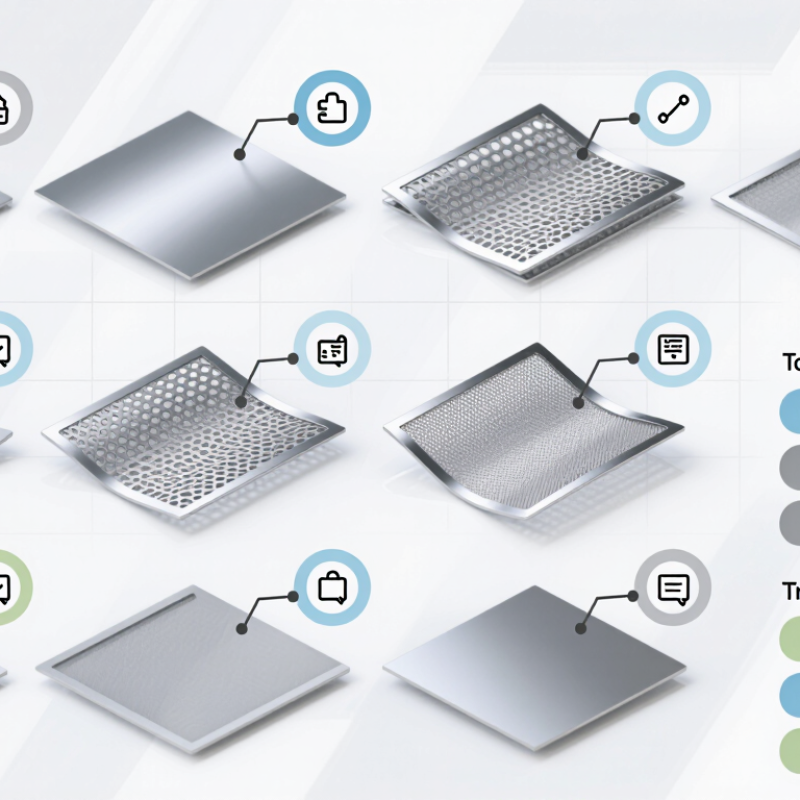
Titanium mesh is a perforated sheet used to bridge or cover selected skull defects. In cranial repair, surgeons may consider it after trauma, tumor removal, or a procedure that leaves part of the skull absent. Its purpose is practical: help protect underlying tissues and restore a more continuous cranial contour. It is not a substitute for careful clinical planning. Every defect differs.
The mesh can often be trimmed and shaped to match the surrounding bone. Small openings allow fixation with screws and may permit tissue contact through the material. Fit matters. A raised edge or poor contour can irritate soft tissue, while fixation must be suitable for the patient and defect. Preoperative imaging helps clinicians assess dimensions and nearby structures; they also consider skin condition, infection risk, and future imaging needs. The best choice depends on the case, not simply the material. Even a neat-looking reconstruction may need adjustment, and that detail deserves honest attention. Patients should discuss expected benefits, limitations, and follow-up with their surgical team.
Definition: Titanium mesh implants are thin, perforated or expanded titanium sheets shaped and fixed to support or cover cranial defects. They are commonly made from commercially pure titanium or titanium alloy. The configurations below are supplier-neutral product categories, not a supplier ranking. Dimensions are indicative examples; actual specifications vary by product and must be verified in the device documentation.
| No. | Mesh Configuration | Typical Material | Indicative Thickness | Form and Features | Cranial Application | Selection Considerations |
|---|---|---|---|---|---|---|
| 1 | Fine-pore sheet mesh | Commercially pure titanium or titanium alloy | About 0.2–0.4 mm | Thin perforated sheet with relatively small openings; can be trimmed and contoured. | Coverage of small or irregular cranial defects and support of reconstructed contours. | Balance contourability with the rigidity required for the defect and fixation plan. |
| 2 | Large-pore perforated mesh | Commercially pure titanium or titanium alloy | About 0.3–0.6 mm | Openings are larger than in fine-pore designs; sheet pattern and opening geometry vary by device. | Cranial defect coverage where an open mesh structure is suitable. | Check the opening pattern, edge finish, available fixation points, and instructions for use. |
| 3 | Low-profile contoured mesh | Commercially pure titanium or titanium alloy | About 0.3–0.5 mm | Pre-contoured or manually formable sheet with a low-profile fixation design. | Reconstruction of cranial curvature, including frontal or parietal regions. | Confirm fit to the patient’s anatomy and avoid repeated bending where the device instructions advise against it. |
| 4 | Flexible thin mesh | Commercially pure titanium or titanium alloy | About 0.2–0.3 mm | Lightweight sheet designed for easier contouring; stiffness depends on thickness and pattern. | Coverage of selected small defects or use as a contour-support component. | Assess handling, fixation stability, and whether additional structural support is needed. |
| 5 | Reinforced or thicker mesh | Often titanium alloy; material is device-specific | About 0.4–0.6 mm | More rigid sheet or reinforced pattern intended to resist deformation relative to thinner mesh. | Selected larger reconstructions where greater construct stiffness is required. | Match stiffness and fixation to defect size, location, and surrounding bone quality. |
| 6 | Anatomically pre-shaped mesh | Commercially pure titanium or titanium alloy | Commonly within about 0.3–0.6 mm | Manufactured with a defined contour; some systems offer multiple shapes or sizes. | Cranial reconstruction when a standard anatomical contour is appropriate. | Check size availability, anatomical coverage, and compatibility with the intended fixation system. |
| 7 | Patient-specific mesh implant | Typically a titanium material specified for the device | Design-dependent; specified for each implant | Made to a patient-specific design using imaging and an approved manufacturing process. | Complex or irregular cranial defects where a standard sheet may not provide the desired fit. | Requires review of imaging, design approval, manufacturing lead time, and applicable regulatory documentation. |
| 8 | Mesh with integrated fixation features | Commercially pure titanium or titanium alloy | About 0.3–0.6 mm | Mesh includes designated holes, tabs, or edges intended to aid fixation. | Fixation of cranial mesh to the remaining skull using compatible screws or plates. | Use compatible fixation components and follow the device-specific surgical instructions. |
| 9 | Expanded-pattern mesh | Commercially pure titanium or titanium alloy | About 0.3–0.5 mm | Open lattice formed by an expanded or patterned sheet; geometry varies across products. | Coverage and support of selected cranial defects where a lattice configuration is appropriate. | Review edge handling, contouring limits, and the intended fixation method. |
| 10 | Cut-to-size mesh sheet | Commercially pure titanium or titanium alloy | About 0.2–0.6 mm | Flat sheet supplied in standard sizes for intraoperative trimming and contouring, subject to device instructions. | Adaptation to varied defect outlines during cranial repair. | Confirm permitted cutting tools, minimum edge distances, and fixation requirements. |
Note: This overview is for general product comparison, not clinical guidance. Titanium mesh selection, dimensions, fixation, and use should be determined by qualified healthcare professionals using the specific implant’s labeling and applicable regulations.
It is a perforated sheet used to cover or bridge selected skull defects. It can help protect underlying tissues and restore a more continuous contour.
It may be considered after trauma, tumor removal, or another procedure leaves part of the skull absent. Each case differs.
Often, yes. Surgeons can trim and shape it to match nearby bone. A raised edge may irritate soft tissue, so fit matters.
Clinicians may review imaging, nearby structures, skin condition, infection risk, and future imaging needs. A neat appearance alone is not enough.
Compare thickness, pore geometry, sheet dimensions, and cutting formats. Ask whether the stated material grade applies to the finished implant or raw material.
Request technical drawings, lot-specific inspection records, and material documents. Check certificate scope, issuing body, validity dates, and manufacturing site.
Records should link each shipment to material batches, inspection results, and packaging labels. A sample record with sensitive details removed can help.
Document revisions may not match, even for experienced buyers. Compare records carefully; vague answers are a warning. Records can still be confusing.
No. Certifications describe quality systems, but buyers should still verify dimensions, change-control procedures, and complaint handling. Keep reviewed records together.
This article explains how Titanium Mesh For Cranial Repair is used to support reconstruction of cranial defects, including its role in providing a formable, stable structure that can be adapted to a patient’s anatomy. It outlines key material benchmarks, such as titanium’s approximate density of 4.51 g/cm³ and the relevance of ASTM F67 grades when assessing commercially pure titanium. It also describes how pore size and sheet thickness can affect shaping, fixation, and the balance between strength and flexibility.
The guide presents a practical framework for evaluating suppliers in China without relying on brand rankings alone. Buyers can compare product ranges, documented certifications, quality-management systems such as ISO 13485, manufacturing controls, and traceability records for materials and finished products. Careful review of technical specifications, inspection documentation, and supplier communication can help healthcare organizations identify options that align with clinical requirements and procurement standards.

 Virelox