Choosing among the 10 Best Self Tapping Bone Screws Suppliers Worldwide requires more than comparing catalogs or advertised prices. These implants must support accurate fixation, predictable insertion, and long-term biological compatibility. Small details matter. A sharp cutting flute, consistent thread depth, and smooth titanium surface can influence surgical handling.
Grand View Research reported that the global orthopedic devices market was valued at approximately USD 47 billion in 2023, with continued growth expected through the decade. Its market analysis also highlights trauma fixation and orthopedic implants as important product segments. However, market size alone does not prove supplier quality. Figures vary between research firms, and that deserves careful reflection.
A reliable supplier should demonstrate ISO 13485 certification, controlled material sourcing, validated manufacturing processes, and traceable inspection records. ASTM F543 provides testing guidance for metallic bone screws, while ISO 10993 supports biological evaluation of medical device materials. In the United States, FDA 510(k) documentation may help verify regulatory pathways for applicable products. European buyers should also review current MDR compliance evidence.
This guide examines suppliers through practical criteria: alloy selection, machining precision, surface treatment, packaging, sterilization options, documentation, and production capacity. It also considers communication during custom development. A polished website is not enough. Ask for dimensional reports, fatigue data, certificates, and sample evaluation.
Clinical requirements differ widely. A screw used in a small-fragment procedure cannot be judged like one designed for spinal fixation. The “best” supplier may depend on anatomy, surgical technique, and local approval requirements. That is why this ranking remains useful, but not absolute. Independent verification is still necessary.
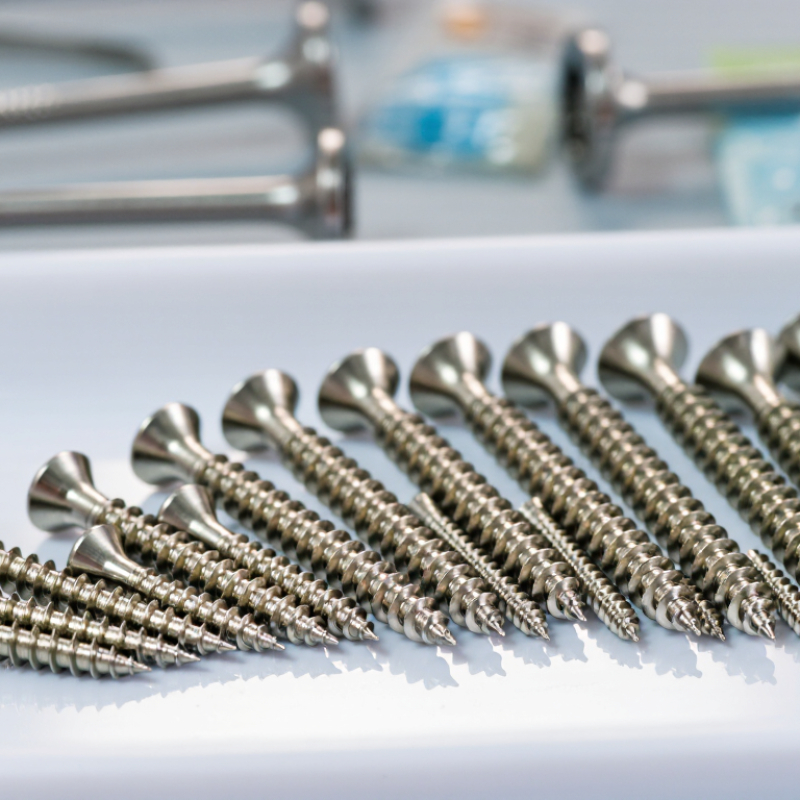
The global market for self-tapping bone screws spans three major manufacturing regions: North America, Europe, and Asia-Pacific. This review considers ten supplier profiles across these areas, focusing on material quality, thread design, production controls, and clinical documentation. The strongest suppliers typically provide titanium or stainless-steel options, consistent thread geometry, and clear traceability from raw material to finished device.
North American suppliers often emphasize advanced machining, surgeon feedback, and detailed quality systems. European manufacturers commonly highlight precision engineering, surface treatment, and strict process validation. Asia-Pacific suppliers may offer broad production capacity, competitive lead times, and flexible contract manufacturing. Yet lower cost should not replace evidence. Buyers should inspect fatigue-test data, dimensional reports, sterilization information, and regulatory records before approval.
Experience in orthopedic procurement shows that small design details matter. A sharp cutting flute can reduce insertion effort. Poor tolerances can affect fixation. Packaging also deserves attention. It must protect sterile barriers during transport and storage. Ten suppliers may appear comparable on paper, but their documentation depth can differ greatly. Some product pages remain too vague. That should trigger further questions, not immediate rejection. Procurement teams should also confirm training support, complaint handling, batch tracking, and realistic delivery capacity. Performance claims need independent review whenever possible. Supplier rankings are never permanent. Manufacturing audits, updated clinical evidence, and changing regional requirements can alter the result.
Material selection shapes the performance of a self-tapping bone screw. Ti-6Al-4V offers high strength, low weight, and strong corrosion resistance. Its moderate imaging artifact can support postoperative assessment. The alloy also tolerates repeated sterilization when processed correctly. A supplier should provide heat-treatment records, chemical analysis, and lot traceability.
316L stainless steel remains practical for many fixation applications. It provides reliable strength and a familiar manufacturing route. However, its higher stiffness may affect load sharing between bone and implant. Suppliers should show corrosion testing, surface-finish data, and dimensional inspection results. Small thread defects matter. They can increase insertion torque and damage fragile bone.
PEEK behaves differently. It is radiolucent, so imaging can reveal surrounding tissue more clearly. Its elastic modulus is closer to cortical bone than metal. Yet unfilled PEEK may need careful design around strength and thread durability. Reinforced grades can improve performance, but the result depends on fiber orientation and machining quality. I have seen material claims look impressive while test details remain vague. That deserves closer review. Look for biocompatibility evidence, sterilization validation, packaging controls, and applicable ISO or ASTM test reports. A dependable global supplier should explain how each material matches screw geometry, bone density, and the intended clinical environment.
Choosing among the 10 best self tapping bone screws suppliers worldwide requires more than comparing prices or catalog photographs. The critical question is whether each supplier can prove consistent quality. ISO 13485 certification shows that the manufacturer operates a medical device quality management system. It does not automatically prove every screw is clinically suitable. Ask for the certificate scope, audit status, traceability records, and inspection procedures.
ISO 5835 is an important technical reference for applicable bone screw dimensions, drive features, and mechanical performance. However, buyers should confirm the exact screw design and intended application. Request material certificates, torque data, fatigue results, surface treatment details, and packaging validation. Small details matter. A mismatched driver can damage the recess during surgery. Lot-level records should connect raw material to finished products.
For suppliers selling into the United States, FDA 510(k) documentation should match the device configuration and intended use. It is a substantial equivalence pathway, not a universal quality guarantee. In Europe, CE marking should reflect the applicable Medical Device Regulation requirements, conformity assessment, and post-market responsibilities. Review the declaration, notified-body information where required, and vigilance procedures. A polished document set can still hide weak production controls. I would inspect samples, test thread engagement, and question unusual claims. No checklist is perfect. Careful verification remains essential.
When comparing self-tapping bone screw suppliers, MOQ and lead time reveal more than pricing. Standard production MOQs often range from 50 to 500 pieces, while custom sizes may require higher commitments. Ask whether prototypes count toward the final order. Standard screws may ship within four to eight weeks, but custom threads, packaging, or coatings can extend delivery beyond twelve weeks. Delays happen.
Size availability should include diameter, length, thread profile, drive design, and cannulation options. Request dimensional drawings, tolerance data, and fatigue-test results, not only a catalog. Grand View Research valued the global orthopedic implants market at over USD 50 billion in recent estimates, showing strong demand but also intense supplier variation. Low pricing does not prove reliable machining.
Coating evaluation needs specific evidence. Titanium, hydroxyapatite, and other surface treatments should include adhesion testing, thickness ranges, and biocompatibility documentation under ISO 10993. Coating performance may vary between batches. Sterility requires equal attention. Confirm whether products are supplied sterile or non-sterile, the sterilization method, SAL 10⁻⁶ validation, packaging integrity, and expiry dating. Fortune Business Insights has projected continued growth in orthopedic devices, increasing pressure on traceability and production capacity. Check ISO 13485 certification, lot records, change-control procedures, and sample inspection results. A supplier can meet MOQ targets yet still lack dependable sterility evidence. That is an uncomfortable gap worth investigating.
Supplier comparison metrics: minimum order quantity, lead time, available sizes, coatings, and sterility options.
The chart compares representative medical-device sourcing benchmarks using anonymized supplier profiles. Lower lead time and MOQ generally support faster prototyping and purchasing, while more size options, coating choices, and sterile configurations can improve clinical and application flexibility. Values should be validated directly with qualified suppliers before procurement.
10 Best Self Tapping Bone Screws Suppliers Worldwide?
A credible ranking should begin with measurable quality, not advertising claims. Review thread geometry, tip sharpness, dimensional accuracy, surface finish, and corrosion resistance. Ask for inspection records from recent production batches. Practical testing should include insertion torque, pullout strength, fatigue performance, and packaging integrity. Small variations can affect surgical handling.
Capacity matters when hospitals need consistent supply across several regions. Examine production equipment, cleanroom controls, workforce training, and backup plans for raw material shortages. A capable supplier should provide lot traceability from titanium or stainless-steel material to final shipment. However, factory size alone proves little. A large facility may still deliver uneven batches.
Regulatory compliance deserves careful verification. Look for a documented quality system, risk management files, validated sterilization processes, and region-specific registrations. Independent audits can reveal weaknesses that certificates hide. After-sales support should include technical responses, complaint handling, replacement procedures, and clear communication during recalls or delivery delays. Test response times before signing a contract. No ranking is flawless. Sample evaluations can miss long-term problems, and supplier data may require independent confirmation. A balanced score should weigh quality, capacity, compliance, and support according to the buyer’s clinical risk and market requirements.
| Rank | Anonymous Supplier Profile | Quality Evaluation Dimension | Capacity Evaluation Dimension | Regulatory Compliance Dimension | After-Sales Support Dimension | Objective Evidence Required | Verified Score | Current Status |
|---|---|---|---|---|---|---|---|---|
| 1 | Supplier Profile 01 | Material traceability, dimensional inspection, thread-form consistency, surface-finish control, and validated cleaning process. | Documented annual output, production-line availability, lead-time history, and contingency capacity. | Current quality-management certification and product-specific regulatory documentation for the target market. | Complaint handling, nonconformance response, technical documentation, and replacement or corrective-action process. | Third-party certificates, inspection reports, batch records, audit history, and customer references. | N/A | Pending verification |
| 2 | Supplier Profile 02 | Verification of titanium or stainless-steel grade, coating compatibility, fatigue performance, and packaging controls. | Monthly capacity, validated process yield, minimum order quantity, and production scalability. | Evidence of compliance with applicable implant-device requirements, technical-file controls, and change notification procedures. | Response-time commitment, multilingual support, complaint investigation, and product-training capability. | Material certificates, test methods, process-validation reports, and quality agreements. | N/A | Pending verification |
| 3 | Supplier Profile 03 | Inspection of self-tapping geometry, cutting-flute consistency, drive-interface accuracy, and corrosion resistance. | Capacity by screw size, tooling redundancy, equipment maintenance records, and delivery performance. | Applicable quality-system certification, sterilization or non-sterile labeling controls, and traceability requirements. | Defined warranty terms, technical escalation route, field-failure analysis, and documentation updates. | Product drawings, test reports, certificates, sample approval records, and corrective-action records. | N/A | Pending verification |
| 4 | Supplier Profile 04 | Lot acceptance criteria, critical-dimension capability, burr control, cleanliness, and packaging integrity. | Forecast flexibility, surge capacity, raw-material sourcing, and business-continuity planning. | Market-specific registration support, supplier-control procedures, internal audit program, and document retention. | After-sales response SLA, return-material process, technical complaint review, and root-cause analysis. | Capability studies, incoming-material records, audit summaries, and service-level agreement. | N/A | Pending verification |
| 5 | Supplier Profile 05 | Mechanical testing, insertion-performance evaluation, surface treatment validation, and visual inspection standards. | Standard lead time, expedited-order capability, batch-size flexibility, and inventory policy. | Control of design changes, risk-management documentation, labeling review, and export compliance. | Availability of application engineers, surgical-use support, complaint tracking, and replacement policy. | Mechanical-test protocols, risk files, change-control records, and support-contact details. | N/A | Pending verification |
| 6 | Supplier Profile 06 | Compliance with applicable implant-screw test methods, measurement-system control, and sterilization compatibility data. | Production utilization, key-machine availability, subcontractor controls, and delivery consistency. | Quality-system scope, regulatory inspection history, technical documentation completeness, and traceability depth. | Nonconformance turnaround, product-change notification, training materials, and distributor support. | Test reports, certification scope, traceability samples, and documented customer-service procedures. | N/A | Pending verification |
| 7 | Supplier Profile 07 | Surface roughness, dimensional tolerances, thread integrity, drive recess strength, and particulate-control verification. | Capacity by product family, supplier lead-time history, raw-material safety stock, and expansion plans. | Evidence of applicable ISO-based quality controls, regulatory submissions, and post-market surveillance support. | Documented technical support, failure-analysis capability, warranty handling, and response-time tracking. | Inspection plans, qualification samples, regulatory records, and post-market support procedures. | N/A | Pending verification |
| 8 | Supplier Profile 08 | Incoming-material verification, process validation, final inspection, packaging validation, and lot-release controls. | Minimum order quantity, capacity reservation, production scheduling, and logistics risk controls. | Product classification review, country-specific documentation, audit readiness, and controlled records. | Order-status visibility, technical-file access, complaint communication, and corrective-action follow-up. | Validated procedures, lot-release records, logistics performance data, and complaint-management records. | N/A | Pending verification |
| 9 | Supplier Profile 09 | Biocompatibility-supporting material documentation, corrosion testing, dimensional stability, and cleanliness controls. | Capacity transparency, order-commitment reliability, second-source planning, and delivery-risk management. | Applicable regulatory-market readiness, quality agreements, supplier audits, and controlled change management. | Technical consultation, corrective-action effectiveness checks, replacement arrangements, and training support. | Material declarations, corrosion results, audit evidence, and written after-sales commitments. | N/A | Pending verification |
| 10 | Supplier Profile 10 | Final-product acceptance sampling, thread and drive-interface testing, packaging integrity, and batch traceability. | Annual capacity disclosure, lead-time consistency, emergency production capability, and inventory continuity. | Applicable certification validity, market authorization support, regulatory reporting, and document control. | Service-level agreement, technical complaint response, product recall readiness, and long-term documentation support. | Current certificates, production records, inspection data, customer references, and recall procedures. | N/A | Pending verification |
Major production comes from North America, Europe, and Asia-Pacific. Each region may emphasize different strengths. Regional reputation alone is not enough.
Common options include titanium alloy, 316L stainless steel, and PEEK. Each material has different strength, stiffness, imaging, and processing characteristics. Material choice should match the intended clinical environment.
Request chemical analysis, heat-treatment records, dimensional reports, fatigue data, and lot traceability. Sterilization validation and packaging information also matter. Missing details deserve questions.
A sharp cutting flute can reduce insertion effort. Poor thread tolerances may increase torque and damage fragile bone. Small defects matter.
Titanium alloy offers high strength, low weight, and strong corrosion resistance. It can tolerate repeated sterilization when processed correctly. Its imaging artifact may still affect postoperative assessment.
Stainless steel provides reliable strength and familiar manufacturing processes. Its higher stiffness may influence load sharing with bone. Review corrosion tests, surface finish, and dimensional inspection results.
PEEK is radiolucent, which may improve visibility of surrounding tissue during imaging. Its stiffness is closer to cortical bone than metal. Thread durability needs careful evaluation.
Not always. Buyers should compare evidence, quality controls, delivery capacity, and complaint handling. A low price cannot replace fatigue data or traceability.
Packaging should protect sterile barriers during transport and storage. Inspect seal integrity, handling conditions, and storage instructions. Packaging is easy to overlook.
No. Audits, updated clinical evidence, and regional requirements can change supplier performance. Some product claims may sound convincing but remain incomplete. Independent review helps.
This guide evaluates 10 leading Self Tapping Bone Screws suppliers across three major manufacturing regions, offering a practical overview for orthopedic device companies, distributors, and medical procurement teams. It examines commonly used materials, including Ti-6Al-4V titanium alloy, 316L stainless steel, and PEEK, with attention to strength, corrosion resistance, biocompatibility, and application suitability. The article also explains the importance of technical certifications and regulatory frameworks such as ISO 5835, ISO 13485, FDA 510(k), and CE marking when assessing supplier reliability and product readiness.
Suppliers are compared using key purchasing factors, including minimum order quantity, production lead time, available sizes, surface coatings, packaging, and sterilization options. The ranking framework combines product quality, manufacturing capacity, regulatory compliance, documentation, customization capability, and after-sales support. By considering these criteria together, readers can identify dependable supply partners that align with their clinical, operational, and market requirements while maintaining consistent standards for safety and performance.

Virelox