Choosing a China-based supplier of Spinal Internal Fixation Systems requires more than comparing prices or polished product photos. Surgeons and purchasing teams need clear specifications, consistent manufacturing, traceable materials, and dependable technical support. A rod may look simple on a catalog page. Its diameter, screw compatibility, surface finish, and documented performance still matter in the operating room.
A practical principle, paraphrased here rather than presented as a verified quotation, reflects priorities associated with spine surgeon Alexander R. Vaccaro: “Implant selection should fit the patient’s anatomy and the surgeon’s plan, not a supplier’s sales pitch.” That distinction matters. Buyers should review quality-system documentation, applicable regulatory records, testing information, and change-control practices. They should also ask how the supplier handles complaints, product updates, and communication with clinical teams. Paperwork alone is not proof of clinical suitability.
Details matter. This outline examines supplier capabilities, product range, manufacturing controls, customization, and after-sales service. It also considers how to compare claims without treating “best” as a universal label. A supplier may offer attractive pricing yet provide limited evidence or slow responses. Conversely, a well-documented company may not meet every hospital’s needs. The evaluation should remain specific to the intended market and clinical use. Verify current credentials independently, and involve qualified clinicians and procurement professionals before making decisions. One caution remains: a supplier profile cannot replace clinical judgment.
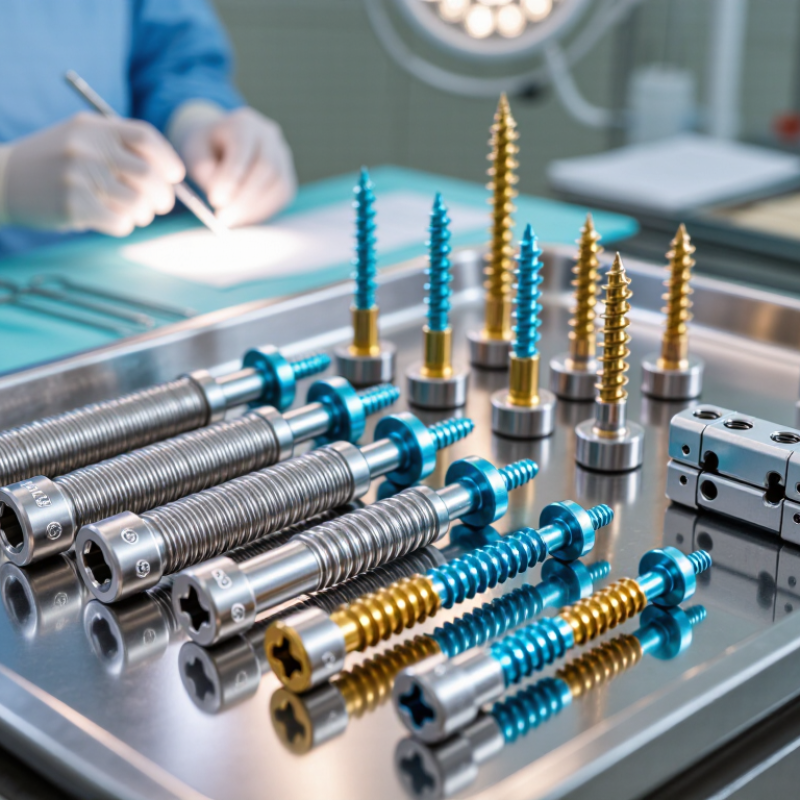
What Spinal Internal Fixation Systems Are
Spinal internal fixation systems are medical implants used to hold selected vertebrae steady. They may include screws, rods, plates, hooks, or interbody cages. A surgeon chooses components based on the spinal level, the patient’s anatomy, and the reason for surgery. The goal is stability. The hardware can help maintain alignment while bone healing takes place.
Picture small screws anchored in vertebrae and connected by a metal rod. This construct limits movement at the treated area. In some procedures, a cage sits between vertebrae to support spacing; bone graft may also be used to encourage fusion. Not every operation needs the same parts. The design matters.
Material, placement, and fit all deserve careful consideration. Titanium alloys are commonly used because they combine strength with relatively low weight, but material choice depends on the case. Imaging, bone quality, and surgical access can affect planning. Hardware does not repair every cause of back pain, and fusion is not guaranteed. That is easy to overlook. Even a technically sound system may bring trade-offs, such as restricted movement at the fused level or the need for follow-up imaging. Patients should discuss the intended benefit, risks, and alternatives with a qualified spine specialist.
| System Type | Typical Spinal Region | Common Components | Typical Clinical Applications | Common Materials | Important Considerations |
|---|---|---|---|---|---|
| Pedicle screw–rod system | Thoracic and lumbar spine; selected sacral applications | Pedicle screws, connecting rods, set screws, and optional transverse connectors | Stabilization during fusion procedures for conditions such as degenerative instability, deformity, fractures, or selected revision cases | Titanium alloy, commercially pure titanium, or cobalt-chromium alloy, depending on the component and system | Safe placement depends on anatomy, imaging, surgical technique, and appropriate screw dimensions. It is commonly used with a fusion procedure but does not itself guarantee fusion. |
| Anterior cervical plate system | Anterior cervical spine | Low-profile plate and screws | May provide added stability after anterior cervical discectomy and fusion or other selected cervical procedures | Commonly titanium or titanium alloy | Plate and screw selection depends on the number of treated levels, anatomy, and the planned procedure. Potential concerns include soft-tissue irritation and screw or plate-related complications. |
| Cervical lateral mass screw–rod system | Posterior cervical spine | Lateral mass screws, rods, connectors, and locking components | Posterior stabilization and fusion for selected cervical instability, deformity, trauma, or revision cases | Commonly titanium alloy; other implant alloys may be used | Placement requires careful attention to cervical anatomy and nearby neural and vascular structures. The fixation plan is tailored to the levels and clinical indication. |
| Cervical pedicle screw system | Selected posterior cervical applications | Pedicle screws, rods, and locking components | May be considered when stronger posterior fixation is needed in selected complex cases | Commonly titanium alloy | Cervical pedicle placement is technically demanding because of the small pedicles and nearby critical structures; use is based on patient anatomy and surgeon judgment. |
| Interbody fusion device | Cervical, lumbar, or selected thoracolumbar levels | Interbody cage or spacer; some designs accept bone graft material | Maintains disc-space height and provides a space for fusion following removal of disc material | Titanium, titanium alloy, or radiolucent polymers such as PEEK; some devices have porous or coated surfaces | An interbody device is distinct from posterior screw–rod fixation, although the two may be used together. Device choice depends on the approach, anatomy, and surgical plan. |
| Hooks, wires, and supplemental fixation components | Selected thoracic, lumbar, or cervical applications | Hooks, sublaminar wires, connectors, or other compatible components | Supplemental stabilization in selected deformity, revision, or anatomy-specific procedures | Typically titanium alloy or stainless steel, depending on the component | These components are selected for specific clinical situations and are not interchangeable with every screw–rod system. |
Note: Spinal internal fixation systems are implantable devices used to help stabilize the spine. The appropriate device and material depend on the patient, spinal level, diagnosis, surgical approach, and applicable regulatory requirements. This table is general educational information, not medical advice.
Common parts include pedicle screws, rods, cervical plates, hooks, wires, and interbody cages. Set screws lock rods in place. Small parts matter.
Cervical, thoracic, and lumbar anatomy calls for different component shapes and fixation approaches. A system suited to one region may not fit another. Fit matters.
Screws and rods may use titanium alloys or cobalt-chromium. Cages may use titanium or PEEK. Each material differs in strength, imaging visibility, and handling.
Selection depends on imaging, bone quality, spinal anatomy, and the surgeon’s plan. A catalogue alone cannot determine a suitable implant. Check the details.
Engineers assess screw paths, rod contours, and connection strength. Manufacturing can include precision machining, controlled forming, and surface finishing. Tiny defects can matter.
Ask for material certificates, batch records, sterilization validation, and packaging-integrity evidence. Review how the supplier investigates defects and corrective actions. Paperwork can still look better than reality.
Confirm the product’s classification and registration with the relevant authority. Check that the registered model matches the quoted implant. Small differences matter.
No. Confirm the certificate covers the manufacturing site and review device-specific test reports. Check dates, samples, and model identifiers. One certificate is not enough.
This article explains what Spinal Internal Fixation Systems are and how they help stabilize the spine during surgical treatment. It introduces common system types and their main components, such as screws, rods, plates, and connectors, while noting that designs vary according to the spinal region and clinical needs. It also outlines key stages in designing and manufacturing these devices, including material selection, precision production, inspection, and performance testing.
The article further discusses the quality and regulatory standards that Chinese suppliers should meet, as well as practical ways to assess potential manufacturing partners. Buyers can compare suppliers by reviewing product documentation, quality-management processes, manufacturing capabilities, testing procedures, and communication practices. These considerations can help healthcare organizations and distributors make informed decisions when selecting a reliable supplier for spinal fixation products.

 Virelox